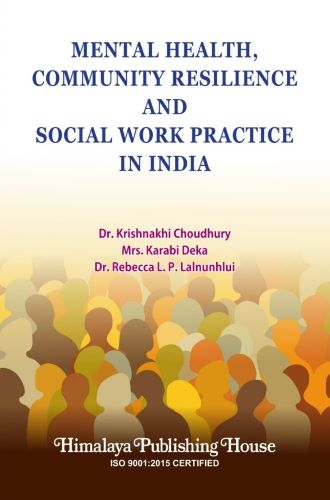





Most of what we are taught about mental health was built elsewhere, for other lives. The textbooks describe the human mind as though caste never shaped a childhood, as though faith were a private hobby rather than a source of healing, as though distress always announced itself in words rather than in a heavy chest or an aching head. We wrote this book because the people we serve deserve frameworks rooted in their own ground.
Drawing on Indian philosophical traditions and the living knowledge of communities, this book follows mental health across fifteen domains where social workers meet it every day. Gender, caste and the city. Faith and healing. Caregiving and hidden labour. Migration, trauma, suicide, ageing, rural distress and the law that is meant to protect us all.
Throughout, we hold two convictions together. Personal suffering has social roots, and ordinary communities hold real resources for recovery. Written for students, practitioners and anyone who cares about well-being in India, this book offers not borrowed theory but a practice that begins where people actually live.
Contents –
1. Gender, Caste and Mental Health in Urban India
2. Faith, Spirituality and Psychological Resilience
3. Caregiving, Hidden Labour and Women’s Wellbeing
4. Digital Change and Mental Health in Marginalised Communities
5. Community-Based Mental Health: Approaches and Best Practices
6. Migration, Displacement and Identity
7. Child Protection, Trauma and Mental Health
8. Substance Use, Mental Health and Community Responses
9. Gender-Based Violence, Trauma and Recovery
10. Suicide Prevention and Crisis Intervention
11. Mental Health of Older Adults
12. School and College Mental Health
13. Dalit Mental Health: Dignity, Humiliation and Healing
14. Rural Mental Health: Villages, Agriculture and Social Work
15. Mental Health Law, Rights and Advocacy in India
Glossary of Key Terms