

Retail Management is the study of selling goods and services. It focuses on understanding customers and delivering value. The field ensures that products reach shoppers easily. It also ensures that buying experiences remain smooth and efficient. A well-managed retail system improves customer satisfaction. It strengthens business performance in both physical and digital markets.
Today, retailing is changing very fast. Technology reshapes how customers shop. Digital platforms influence every buying decision. Retailers now focus on convenience and personalisation. They also focus on strong service and brand experience. Concepts like omni-channel retailing and private labels shape modern retail. Indian retail markets also face new trends and challenges. These changes demand fresh skills and deeper understanding.
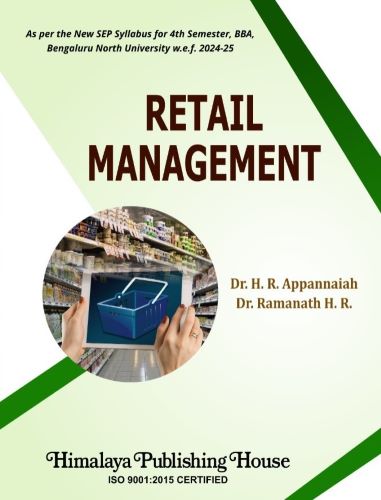
This book gives a clear understanding of retail management. It explains core retail concepts in simple terms. It covers retail formats, industry trends, and the role of retail in supply chains. It also discusses consumer behaviour, segmentation, and CRM in retail. Store location principles and design concepts are explained with clarity. Topics like visual merchandising and store atmosphere support practical understanding.
The book also covers major operations and merchandise management ideas. It explains store operations and the merchandise planning process. Category management concepts and the role of the buyer are included. Retail pricing strategies are explained with cost, value, and competition perspectives. Promotional pricing and markdown strategies help learners understand real retail practices.
Retail strategy and modern trends form the final section. The book discusses branding, franchising, and private labels. It introduces e-retailing and omni-channel models for today’s market. Legal and ethical issues are also highlighted for responsible practice. Each unit offers structured learning and practical relevance.
The book is designed for students and practitioners. It helps learners build strong conceptual knowledge. It supports academic learning and real-world application. Graded questions are included for self-testing and reinforcing key ideas. The content prepares readers for modern retail challenges. The focus is on clarity, depth, and practical value.
Contents –
UNIT – 1 INTRODUCTION
Retailing: Meaning, Importance and Types of Retailing Retail Formats: Store and Non-Store based Retail Formats (To be discussed in brief) Role of Retailing in the Supply Chain, Trends in Indian Retail Markets, Challenges in Retail Industry
UNIT – 2 RETAIL CONSUMER AND MARKET SEGMENTATION
Retail Consumer, Buying Decision Process, Factors Influencing Retail Consumer Behaviour, Market Segmentation in Retail, Targeting and Positioning Strategies, Customer Relationship Management (CRM) in Retail
UNIT – 3 RETAIL LOCATION AND STORE DESIGN
Retail Location: Meaning, Importance and Types of Retail Location; Site Selection Criteria, Store Layout and Design Principles, Visual Merchandising, Store Atmosphere and its Impact on Sale
UNIT – 4 RETAIL OPERATIONS AND MERCHANDISE MANAGEMENT
Retail Operations Management: Meaning, Retail Store Operations Merchandise Management: Meaning, Merchandise Planning Process, Role of the Buyer Category Management: Concept, Category Captain, Benefits of Category Management Retail Pricing Strategies: Types of Pricing – Cost-based, competition based, value-based, psychological pricing; Promotional Pricing – Discounts, bundling, buy-one-get-one (BOGO) offers to increase short-term sales; Price Adjustments: Markdowns and clearance strategies.
UNIT – 5 RETAIL STRATEGY AND TRENDS
Retail Strategy Formulation and Implementation, Branding in Retail, Franchising and Private Labels, E-Retailing and Omni-channel Retail Emerging Trends Retailing, Legal and Ethical Issues in Retailing