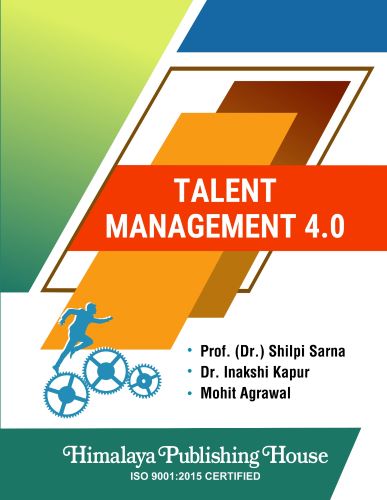


Talent Management: 4.0 is a comprehensive roadmap designed for students, leaders, and HR professionals focused on driving organisational growth and innovation. The book provides an in-depth, integrated exploration of the entire talent lifecycle, covering acquisition, development, performance management, employee engagement, and succession planning. Its key differentiator is a strong emphasis on modern HR technology, data analytics, and Artificial Intelligence (AI) in transforming practices, including the use of predictive analytics for talent forecasting. It offers evidence-based insights into building a strong employer brand, promoting diversity and inclusion, and addressing legal and ethical considerations in workforce management.
Contents –
CHAPTER 1: FUNDAMENTALS OF TALENT MANAGEMENT
1.1 Core Concepts and Definitions
1.1.1 Definitions of Talent, Talent Management
1.1.2 Talent Management — Need, Objectives and Scope
1.1.3 Types of Talent at the Workplace
1.1.4 Talent vs. Knowledge
1.1.5 Critical Stages of Talent Lifecycle
1.1.6 Talent Management Best Practices in Organisations
1.2 Evolution and Foundation
1.2.1 Historical Overview of Talent Management
1.2.2 Theoretical Frameworks for Understanding Talent Management
1.2.3 Evolving Role of HR in Talent Management
1.2.4 Talent Management Model
1.2.5 Harnessing Emerging Technologies in Talent Management
Summary
Review Questions
Discussion Questions
Skill Development Exercises
Case Study
CHAPTER 2: TALENT ACQUISITION AND WORKFORCE PLANNING IN BUSINESS ORGANISATIONS
2.1 Overview of Talent Acquisition
2.1.1 Definition
2.1.2 Key Components of Talent Acquisition
2.1.3 Talent Acquisition vs. Recruitment
2.1.4 Talent Acquisition Process
2.2 Tech Enhanced Talent Acquisition Strategies
2.2.1 Transformative Impact of Digital Technologies on Recruitment
2.2.2 AI-Driven Candidate Sourcing and Automated Screening
2.2.3 Leveraging Social Media and Digital Networks for Recruitment
2.2.4 Conversational AI: Chatbots and Virtual Assistants in Talent Acquisition
2.2.5 Data Analytics for Recruitment Metrics
2.2.6 Predictive Analytics for Enhanced Candidate Matching
2.2.7 Innovative Assessment Tools: VR and AI-Enhanced Candidate Evaluation
2.3 Data-Driven Workforce Planning
2.3.1 Importance of Data Analytics in Workforce Planning
2.3.2 Predictive Analytics in Workforce Decision-Making
2.3.3 Proactive Talent Forecasting and Risk Management
2.3.4 Adapting Workforce Strategies for Future Technological Advancements
2.4 Enhancing Employer Branding
2.4.1 Leveraging AI for Employer Branding Initiatives
2.4.2 Social Media and Digital Marketing Strategies for Employer Branding
2.4.3 Assessing and Managing Employer Brand Perception
2.4.4 Using Virtual Reality to Strengthen Employer Branding
Summary
Review Questions
Discussion Questions
Skill Development Exercises
Case Study
CHAPTER 3 ENHANCING CANDIDATE EXPERIENCE WITH TECHNOLOGY
3.1 Introduction to Onboarding
3.1.1 Definition of Onboarding
3.1.2 Goals of Effective Onboarding
3.2 Digital Onboarding Processes
3.2.1 AI-Powered Online Portals and Virtual Orientation
3.2.2 Gamification in Recruitment
3.2.3 Gamification in Onboarding
3.2.4 Virtual Reality (VR) in Candidate Engagement
3.2.5 Augmented Reality (AR) in Candidate Engagement
3.3 Measuring Onboarding Success
3.3.1 Onboarding Metrics
3.3.2 Feedback Mechanism and Continuous Improvement
3.3.3 Avoiding Common Onboarding Pitfalls
3.3.4 AI and Machine Learning in Personalised Onboarding
Summary
Review Questions
Discussion Questions
Skill Development Exercises
Case Study
CHAPTER 4: LEARNING AND DEVELOPMENT IN THE DIGITAL ERA
4.1 Introduction to Digital Learning and Development
4.1.1 Definition and Scope
4.1.2 Digitalisation of Learning & Development (L&D)
4.1.3 Digital Learning Strategies
4.2 Designing Digital Learning Experiences
4.2.1 AI-Driven Methods for Assessing Learning Needs Within Organisations
4.2.2 AI Tools for Learning Needs Analysis
4.2.3 Designing Personalised Learning Paths Using AI and Data Analytics
4.2.4 Technology-Enabled Training Programmes
4.2.5 E-Learning Platforms and Technologies
4.2.6 Virtual and Augmented Reality in Training
4.2.7 Gamification in Learning and Development
4.2.8 Mobile Learning and Microlearning for On-the-Go Training
4.2.9 Social Learning and Collaborative Technologies
4.3 Digital L&D Effectiveness and Evaluation
4.3.1 Setting Objectives for Digital L&D Programmes
4.3.2 Advanced Metrics
4.3.3 Adaptive Learning Technologies and AI-Driven Learning Analytics
Summary
Review Questions
Discussion Questions
Skill Development Exercises
Case Study
CHAPTER 5: INNOVATIVE PERFORMANCE MANAGEMENT
5.1 Introduction to Modern Performance Management
5.1.1 Definition and Objectives
5.1.2 Performance Management Process
5.1.3 Shift from Traditional to Contemporary Performance Management
5.1.4 Modern Approaches for Performance Appraisal
5.2 Real-time Feedback Mechanisms
5.2.1 Importance of Real-time Feedback in Driving Performance Improvement
5.2.2 AI-powered Tools for Continuous Feedback and Performance Monitoring
5.3 AI-powered Performance Analytics
5.3.1 Predictive Analytics for Performance Forecasting and Enhancement
5.3.2 Metrics and Key Performance Indicators (KPIs)
5.3.3 Utilising Data Analytics for KPI Tracking
Summary
Review Questions
Discussion Questions
Skill Development Exercises
Case Study
CHAPTER 6: PROMOTING DIVERSITY AND INCLUSION
6.1 Introduction to Diversity and Inclusion
6.1.1 Diversity: Definitions and Importance
6.1.2 Creating a Diverse Workforce
6.1.3 Impact of Diverse Teams on Organisational Performance and Innovation
6.1.4 Technology’s Role in Enhancing Diversity in the Workplace
6.1.5 Inclusion: Definitions and Importance
6.1.6 Building an Inclusive Culture
6.1.7 Role of Leaders in Promoting a Diverse and Inclusive Workplace Culture
6.2 Measuring and Evaluating Diversity and Inclusion
6.2.1 Feedback Mechanism and Evaluation
6.2.2 Key Diversity and Inclusion Metrics
6.2.3 Data-Driven Diversity and Inclusion Analytics
6.2.4 Advanced technologies in Diversity and Inclusion Initiatives.
Summary
Review Questions
Discussion Questions
Skill Development Exercises
Case Study
CHAPTER 7. COACHING AND MENTORING
7.1 Introduction to Coaching and Mentoring
7.1.1 Definitions and Scope
7.1.2 Distinction between Coaching and Mentoring
7.2 Role of Technology in Coaching and Mentoring
7.2.1 Integrating Advanced Technologies in Coaching and Mentoring
7.2.2 Ethical Considerations in Tech-Driven Coaching and Mentoring
7.3 Implementation and Evaluation of Coaching and Mentoring Strategies
7.3.1 Engaging and Retaining Participants in Digital Environment
7.3.2 Key Metrics and Feedback Mechanism
7.3.3 Tools for Tracking Progress and Outcomes
7.3.4 Best Practices
Summary
Review Questions
Discussion Questions
Skill Development Exercises
Case Study
CHAPTER 8: LEADERSHIP DEVELOPMENT AND SUCCESSION PLANNING
8.1 Fundamentals of Leadership Development
8.1.1 Definition and Objectives
8.1.2 Importance of Leadership Development in Modern Organisations
8.1.3 Traditional vs. Modern Leadership Models
8.2 Technology in Leadership Development
8.2.1 Designing Effective Leadership Training Modules
8.2.2 Blended Learning Approaches
8.2.3 Leveraging Online Resources and Digital Content for Leadership Development Programmes
8.2.4 Key Performance Indicators (KPIs) and Metrics for Leadership Development Programmes
8.2.5 Feedback Mechanisms and Continuous Improvement
8.3 Succession Planning: Strategies and Best Practices
8.3.1 Succession Planning: An Overview
8.3.2 Objectives of Succession Planning
8.3.3 Integration of Succession Planning with HR Processes
8.4 Strategies for Succession Planning
8.4.1 Designing a Succession Plan: Steps
8.4.2 Using Digital Tools to Identify and Develop High-potential Talent
8.4.3 Technology Tools for Leadership Pipeline Management
8.5 Global Perspectives and Cross-Cultural Leadership Development
8.5.1 Adapting Leadership Programmes for Different Cultural Contexts
8.5.2 Global Mobility and Leadership Exchange Programmes
8.5.3 Managing a Global Leadership Pipeline
8.5.4 Preparing for Uncertainty and Rapid Change in Leadership Development
Summary
Review Questions
Discussion Questions
Skill Development Exercises
Case Study
CHAPTER 9: EMPLOYEE ENGAGEMENT AND RETENTION THROUGH TECHNOLOGY
9.1 Introduction to Employee Engagement and Retention
9.1.1 Definitions and Importance
9.1.2 Current Trends
9.2 Employee Retention Strategies
9.2.1 Understanding Turnover and Its Causes
9.2.2 Career Development and Growth Opportunities
9.2.3 Employee Involvement and Empowerment
9.3 Technology in Employee Engagement and Retention
9.3.1 Employee Engagement e-Platforms and Digital Solution
9.3.2 AI-Driven Analytics in Employee Engagement Surveys
9.3.3 Effective Communication and Feedback Mechanisms Tools
9.3.4 Interactive Platforms for Employee Recognition
9.3.5 Measuring and Evaluating Engagement and Retention through Analytics
9.3.6 Predictive Analytics for Identifying and Mitigating Retention Risks
9.3.7 Using HR Tech for Personalised Retention Plans
Summary
Review Questions
Discussion Questions
Skill Development Exercises
Case Study
CHAPTER 10: COMPETENCIES FOR MODERN WORKFORCE
10.1 Overview of Modern Workforce Competencies
10.1.1 Defining Workforce Competencies
10.1.2 Importance of Competency Development
10.2 The Changing Landscape of Work
10.2.1 Social and Emotional Intelligence
10.2.2 Cross-Cultural Communication and Sensitivity
10.2.3 Hybrid Work Models and Remote Work Trends
10.3 Digital Literacy and Technological Proficiency
10.3.1 Understanding and Utilising Emerging Technologies
10.3.2 Enhancing Data Literacy and Analytical Skills
10.3.3 Advanced Tools and Technologies for Assessment and Feedback Mechanisms
Summary
Review Questions
Discussion Questions
Skill Development Exercises
Case Study