
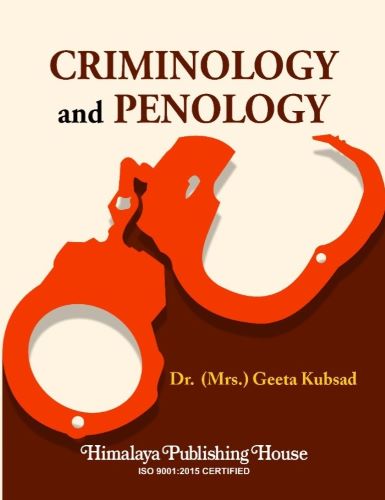
Criminology, the scientific study of crime, criminals, and the criminal justice system, provides essential insights into the complexities of criminal behaviour and societal responses. This curriculum is thoughtfully designed to offer students a comprehensive exploration of criminology’s multifaceted dimensions, including theoretical foundations, causal analyses, justice mechanisms, and correctional strategies.
Contents –
1. Nature And Scope: Crime and Criminology
1.1 Nature and Scope: Crime and Criminology
1.1.1 Concept of Crime: 18th, 19th and 20th Century
1.1.2 Classification of Crime
1.1.3 Definitions of Criminology
1.1.4 History of Criminology
1.1.5 Interrelation between Criminology, Penology and Criminal Law
1.1.6 Is Criminology a Science?
1.2 The Schools of Criminology
1.2.1 Pre-Classical School of Criminology
1.2.2 The Classical School
1.2.3 Neo-Classical School
1.2.4 Positive School
1.2.5 Cartographic School
1.2.6 Clinical School of Criminology
1.2.7 Sociological School of Criminology
1.2.8 Socialist School of Criminology
1.2.9 New Criminology Trends for Research
1.3 Check Your Progress
2. Causes of Criminal Behaviour
2.1 Causes of Criminal Behaviour
2.1.1 Heredity and Crime
2.1.2 Bio-physical Factors and Criminality
2.1.3 Freud’s Theory of Criminal Behaviour
2.1.4 Group and Class Conflict in Criminal Behaviour
2.1.5 Emotional and Psychological Factors in Criminal Behaviour
2.1.6 Certain Modern and Technological Developments
2.1.7 Atrocities
2.1.8 Theory of Differential Association (Sutherland)
2.1.9 Multiple Factors Approach to Crime Causation: Mobility, Cultural Conflicts, Family Background, Political Ideology, Religion and Crime, Economic Condition, Ecology of Crime.
2.2 Classification of Criminals
2.2.1 Ordinary and First-time Offenders
2.2.2 Habitual Offenders
2.2.3 Women Offenders
2.2.4 Juveniles in Conflict with the Law
2.2.5 White Collar Criminals
2.2.6 Cybercriminals
2.2.7 Terrorists
2.3 Check Your Progress
3. Police and Criminal Justice
3.1 Introduction to Police and Criminal Justice
3.1.1 The Police System
3.1.2 Structural Organisation of Police at the Centre and States in the India
3.1.3 Mode of Recruitment and Training in the Police System in India
3.1.4 Powers and Duties of Police Under Police
Act, Criminal Procedure Code (CrPC), and Other Laws
3.1.5 Method of Police Investigation
3.1.6 Third Degree Method in Police Investigations
3.1.7 Corruption in Police
3.1.8 Relationship between Police and Prosecution
3.1.9 Liability of Police for Custodial Violence
3.1.10 Police Public Relations
3.1.11 Police Reforms in India
3.2 Meaning of Penology
3.3 Theories of Punishment
3.4 Kinds of Punishment
3.5 Capital Punishment
3.6 Check Your Progress
4. Treatment or Correction of Offenders
4.1 Treatment or Correction of Offenders
4.1.1 The Need for Reformation and Rehabilitation of Offenders Undergoing Punishment/Imprisonment
4.1.2 The Role of Psycho-Analysts and Social Workers in the Prison
4.1.3 Vocational and Religious Education and Apprenticeship Programmes for Offenders
4.1.4 Group Counselling and Resocialisation Programmes for Offenders
4.1.5 Prisoner’s Organisations for Self-Government
4.1.6 Participation of Inmates in Community Services
4.1.7 An Appraisal of Reformative Techniques in Correctional Systems
4.1.8 Efficacy of Imprisonment as a Measure to Combat Criminality and the Search for Substitutes
4.1.9 The Prisons Act, 1894
4.1.10 Kinds of Prisons
4.2 Probation of Offenders
4.2.1 Probation and Suspended Sentence – Distinction
4.2.2 The Probation of Offenders Act, 1958
4.3 Parole and Furlough
4.3.1 Parole and Indeterminate Sentence – Distinction
4.3.2 Parole and Probation – Comparison
4.3.3 Parole Distinguished from Furlough
4.3.4 The Object of Parole
4.3.5 Parole in India
4.3.6 Conditions of Parole
4.3.7 Parole Violation
4.3.8 Supervision of Parolees
4.3.9 Problems of Released Offender
4.3.10 Attitudes of the Community Towards Released Offenders
4.4 Victimology
4.4.1 Definition, Nature and Development of Victimology
4.4.2 Victim and Criminal Justice System in India
4.4.3 UN Declaration on Justice for Victims of Crimes, 1985
4.4.4 Rehabilitation and Reconciliation of Victims
4.5 Check Your Progress