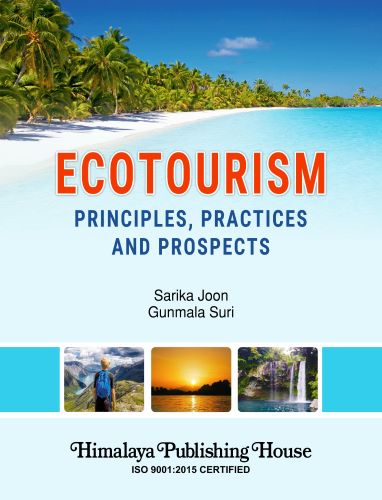



Ecotourism: Principles, Practices and Prospects presents a rigorous and comprehensive examination of ecotourism as a critical instrument for sustainable development. The volume elucidates the conceptual foundations of ecotourism, its core principles, and its global applications, with particular emphasis on environmental conservation, cultural preservation, and community engagement. It further analyses the planning frameworks, regulatory mechanisms, certification systems, and management strategies that underpin responsible destination governance. Addressing contemporary challenges—including over-tourism, greenwashing, and climate-related vulnerabilities the book also considers emerging innovations that are reshaping the sector. Concluding with an exploration of regenerative tourism, this work serves as an indispensable reference for scholars, practitioners, and policymakers committed to advancing ethical, resilient, and future-oriented tourism paradigms.
Contents –
CHAPTER 1: UNDERSTANDING ECOTOURISM
1.1 Defining Ecotourism: Origin and Evolution
1.1.1 The Origin of Ecotourism
1.1.2 Defining Ecotourism: Core Principles
1.1.3 Global Impact and Case Studies in Ecotourism
1.1.4 Key Organisations in Ecotourism Development
1.1.5 Challenges and Criticisms
1.1.6 Future Directions in Ecotourism
1.2 Principles and Core Values of Ecotourism
1.2.1 Environmental Conservation
1.2.2 Socio-Cultural Responsibility
1.2.3 Education and Awareness
1.2.4 Economic Sustainability
1.2.5 Ethical Wildlife Interaction
1.3 Ecotourism vs Mass Tourism: A Comparative View
1.3.1 Conceptual Foundations: Philosophical Differences
1.3.2 Operational Frameworks: How They Function
1.3.3 Economic Impacts: A Dual Perspective
1.3.4 Environmental Consequences: A Stark Contrast
1.3.5 Socio-Cultural Implications
1.3.6 Future Trajectories: Projected Dominance of Tourism Models
1.4 Stakeholders in Ecotourism: Tourists, Communities, and Conservationists
1.4.1 Tourists: The Driving Force of Ecotourism
1.4.2 Local Communities: The Heart of Ecotourism
1.4.3 Conservationists: Guardians of Biodiversity
1.4.4 Interdependence and Conflict Resolution
1.5 Global Trends and the Growth of the Ecotourism Industry
1.5.1 The Rise of Ecotourism: A Global Phenomenon
1.5.2 Key Drivers of Ecotourism Growth
1.5.3 Emerging Trends in Ecotourism
1.5.4 Challenges and Barriers to Ecotourism Growth
1.5.5 Future Prospects and Strategic Recommendations
— Chapter Summary
— Review Questions
— References
CHAPTER 2: ENVIRONMENTAL AND CULTURAL CONSERVATION
2.1 The Role of Ecotourism in Biodiversity Preservation
2.1.1 Theoretical Framework: Ecotourism as a Conservation Mechanism
2.1.2 Empirical Evidence: Conservation Outcomes
2.1.3 Best-Practice Models from Global Case Studies
2.1.4 Challenges and Mitigation Strategies
2.1.5 Future Directions for Enhancing Conservation Outcomes
2.2 Sustainable Use of Natural Resources in Ecotourism Destinations
2.2.1 Theoretical Foundations of Sustainable Resource Use
2.2.2 Sustainable Resource Management Strategies
2.2.3 Waste Management and Pollution Control
2.2.4 Community-Based Natural Resource Management (CBNRM)
2.2.5 Challenges and Future Directions
2.3 Protecting Indigenous Cultures through Responsible Tourism
2.3.1 Theoretical Foundations: Cultural Sustainability in Tourism
2.3.2 Global Case Studies of Indigenous-Led Ecotourism
2.3.3 Economic Impacts of Indigenous Tourism
2.3.4 Challenges in Indigenous Tourism
2.3.5 Best Practices for Responsible Engagement
2.3.6 Future Directions
2.4 Ecotourism and Climate Change Mitigation
2.4.1 Theoretical Underpinnings of Ecotourism’s Role in Climate Mitigation
2.4.2 Practical Strategies for Climate Mitigation in Ecotourism
2.4.3 Community-Led Climate Action Through Ecotourism
2.4.4 Policy and Global Collaboration
2.4.5 Challenges and Future Pathways
2.5 Case Studies in Conservation-Driven Tourism
2.5.1 Theoretical Underpinnings of Conservation Tourism
2.5.2 Case Studies
2.5.3 Challenges and Solution
2.5.4 Emerging Innovations
— Chapter Summary
— Review Questions
— References
CHAPTER 3: COMMUNITY PARTICIPATION AND EMPOWERMENT
3.1 Community-Based Ecotourism: Models and Benefits
3.1.1 Theoretical Foundations of Community-Based Ecotourism
3.1.2 Global Models of Community-Based Ecotourism
3.1.3 Benefits of Community-Based Ecotourism
3.1.4 Challenges and Solutions
3.1.5 Policy Recommendations
3.2 Economic Empowerment through Local Ownership and Employment
3.2.1 Theoretical Foundations of Economic Empowerment in Ecotourism
3.2.2 Models of Local Ownership and Employment
3.2.3 Enabling Institutional Frameworks
3.2.4 Structural Barriers and Equity Considerations
3.3 Gender and Social Inclusion in Ecotourism Initiatives
3.3.1 The Role of Gender in Ecotourism
3.3.2 Social Inclusion in Ecotourism: Beyond Gender
3.3.3 Strategies for Gender and Social Inclusion in Ecotourism
3.4 Education, Awareness, and Capacity Building
3.4.1 Theoretical Foundations of Education in Ecotourism
3.4.2 Education Strategies for Stakeholders
3.4.3 Institutional Capacity Development
3.4.4 Challenges and Future Directions
3.5 Balancing Visitor Experience with Community Well-being
3.5.1 The Dual Mandate of Ecotourism: Visitor Satisfaction vs Community Welfare
3.5.2 Economic Equity: Ensuring Tourism Benefits Reach Local Communities
3.5.3 Cultural Preservation vs Tourist Demand
3.5.4 Strategies for Sustainable Visitor-Community Balance
— Chapter Summary
— Review Questions
— References
CHAPTER 4: PLANNING, POLICY AND MANAGEMENT
4.1 Planning Ecotourism Destinations: Criteria and Best Practices
4.1.1 Key Criteria for Ecotourism Destination Planning
4.1.2 Best Practices in Ecotourism Destination Development
4.1.3 Monitoring and Adaptive Management
4.2 Regulatory Frameworks and Certification Systems
4.2.1 Theoretical Foundations of Ecotourism Governance
4.2.2 International and National Regulatory Frameworks
4.2.3 Certification and Eco-Labelling Systems
4.2.4 Emerging Trends and Future Directions
4.3 Impact Assessment and Carrying Capacity
4.3.1 Theoretical Foundations of Impact Assessment in Ecotourism
4.3.2 Methodologies for Assessing Impacts and Carrying Capacity
4.3.3 Implementing Carrying Capacity Limits
4.3.4 Emerging Challenges and Innovations
4.4 Marketing Ecotourism: Ethical Promotion and Branding
4.4.1 Theoretical Foundations of Ethical Ecotourism Marketing
4.4.2 Strategies for Ethical Promotion
4.4.3 Community-Centric Branding Approaches
4.4.4 Measuring Marketing Impact Beyond ROI
4.5 Risk Management and Crisis Response in Ecotourism Areas
4.5.1 Theoretical Foundations of Risk in Ecotourism Contexts
4.5.2 Strategic Risk Assessment Methodologies
4.5.3 Crisis Response Frameworks for Protected Areas
4.5.4 Building Long-Term Resilience
— Chapter Summary
— Review Questions
— References
CHAPTER 5: THE FUTURE OF ECOTOURISM
5.1 Technology and Innovation in Sustainable Travel
5.1.1 Digital Platforms and Transparency in Sustainable Tourism
5.1.2 Green Energy and Smart Infrastructure
5.1.3 Immersive Technologies for Conservation Awareness
5.1.4 Ethical Considerations in Tech-Driven Ecotourism
5.1.5 Future Horizons: Next-Generation Innovation
5.2 Challenges: Over-Tourism, Greenwashing, and Policy Gaps
5.2.1 Over-Tourism: When Sustainability Reaches Its Limits
5.2.2 Greenwashing: The Erosion of Trust in Ecotourism
5.2.3 Policy Gaps: Governance in a Borderless Industry
5.2.4 Interconnected Challenges and Systemic Solutions
5.3 Ecotourism in the Post-Pandemic World
5.3.1 The Dual Impact of COVID-19 on Ecotourism
5.3.2 Emerging Post-Pandemic Traveller Psychographic
5.3.3 Innovative Resilience Strategies
5.3.4 Redefining Success in Post-Pandemic Ecotourism
5.4 Partnerships and International Cooperation for Sustainability
5.4.1 The Rationale for Partnerships in Ecotourism
5.4.2 Typologies of Partnerships in Ecotourism
5.4.3 International Cooperation in Ecotourism
5.4.4 Challenges in Partnerships and Cooperation
5.4.5 Case Studies of Effective Partnerships
5.4.6 Future Directions for Ecotourism Partnerships
5.5 Toward Regenerative Tourism: Beyond Sustainability
5.5.1 Theoretical Foundations of Regenerative Tourism
5.5.2 Implementing Regenerative Models in Ecotourism
5.5.3 The Business Case for Regenerative Tourism
5.5.4 Challenges and Critiques
— Chapter Summary
— Review Questions
— References