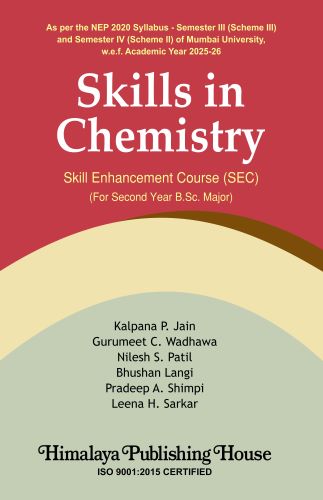


In today’s world, cosmetics and personal care products have become an integral part of everyday life. From basic hygiene to advanced skincare and grooming, the role of cosmetics is no longer limited to aesthetics—it now encompasses health, wellness, and science. This book is an earnest attempt to introduce learners to the fascinating and practical world of cosmetic formulation and analysis.
The primary objective of this book is to acquaint students with fundamental techniques involved in the preparation of commonly used cosmetic and personal care products. It emphasizes developing hands-on laboratory skills by guiding learners through the formulation of various products such as talcum powder, shampoo, bath soap, hand wash, body lotion, and more. Each preparation is carefully designed to help students follow standard laboratory protocols and understand the role of each ingredient used.
In addition to formulation, the book highlights essential quality assessment techniques such as solubility testing, pH measurement, viscosity analysis, and foaming ability determination. These analytical methods help students gain a deeper understanding of the physicochemical properties of cosmetic products and their relevance to product performance and safety.
Furthermore, the book includes exercises in label analysis and ingredient surveys to enable learners to critically evaluate commercial cosmetic products. These activities promote awareness about active ingredients, their functionalities, and regulatory compliance. Comparative studies of branded products also foster analytical thinking and benchmarking skills-students will be equipped not only to formulate and analyze cosmetic products but also to interpret their efficacy, safety, and quality based on scientific parameters. The content is crafted to ensure that learners gain both theoretical knowledge and practical insights, laying a strong foundation for careers in cosmetic science, formulation chemistry, or the personal care industry.
Contents –
Unit I: Preparations
1.1 To Prepare the Talcum Powder
1.2 To Prepare the Bath Soap
1.3 To Prepare the Shampoo
1.4 To Prepare the Nail Polish
1.5 To Prepare the Nail Polish Remover
1.6 Making Hand Wash Liquid Soap
1.7 To Prepare Hand Sanitiser
1.8 To Prepare Hand Cream
1.9 To Prepare Body Lotion
1.10 To Prepare Aftershave Lotion
1.11 Herbal Soap
1.12 Lather Shaving Cream
1.13 Lipstick
1.14 Papaya Face Pack
1.15 Turmeric Face Pack
Unit 2: Analysis
2.1 To Determine the Amount of Matter Insoluble in Boiling Water of the Given Material
2.2 To Determine the Moisture, Volatility and to Test the Solubility of Colour in the Given Material
2.3 To study the comparative foaming ability of the various Shampoo brands using Cylinder Shake Method
2.4 To Measure the pH of the Sample of a Cosmetic Products using pH Meter
2.5 To Determine the Relative Viscosity of a Given Liquid Product using Ostwald Viscometer
2.6 To Determine the Concentration of Thioglycolic Acid in a Given Depilatories
Unit 3: Surveys
3.1 To Carry out the Survey of Given Cosmetic Product’s Label
3.2 To carry out the Study of Ingredients in Given Cosmetic Products
3.3 To Determine and Compare the Melting Points of the Lipstick of Various Brands using Slip Melting Point Method