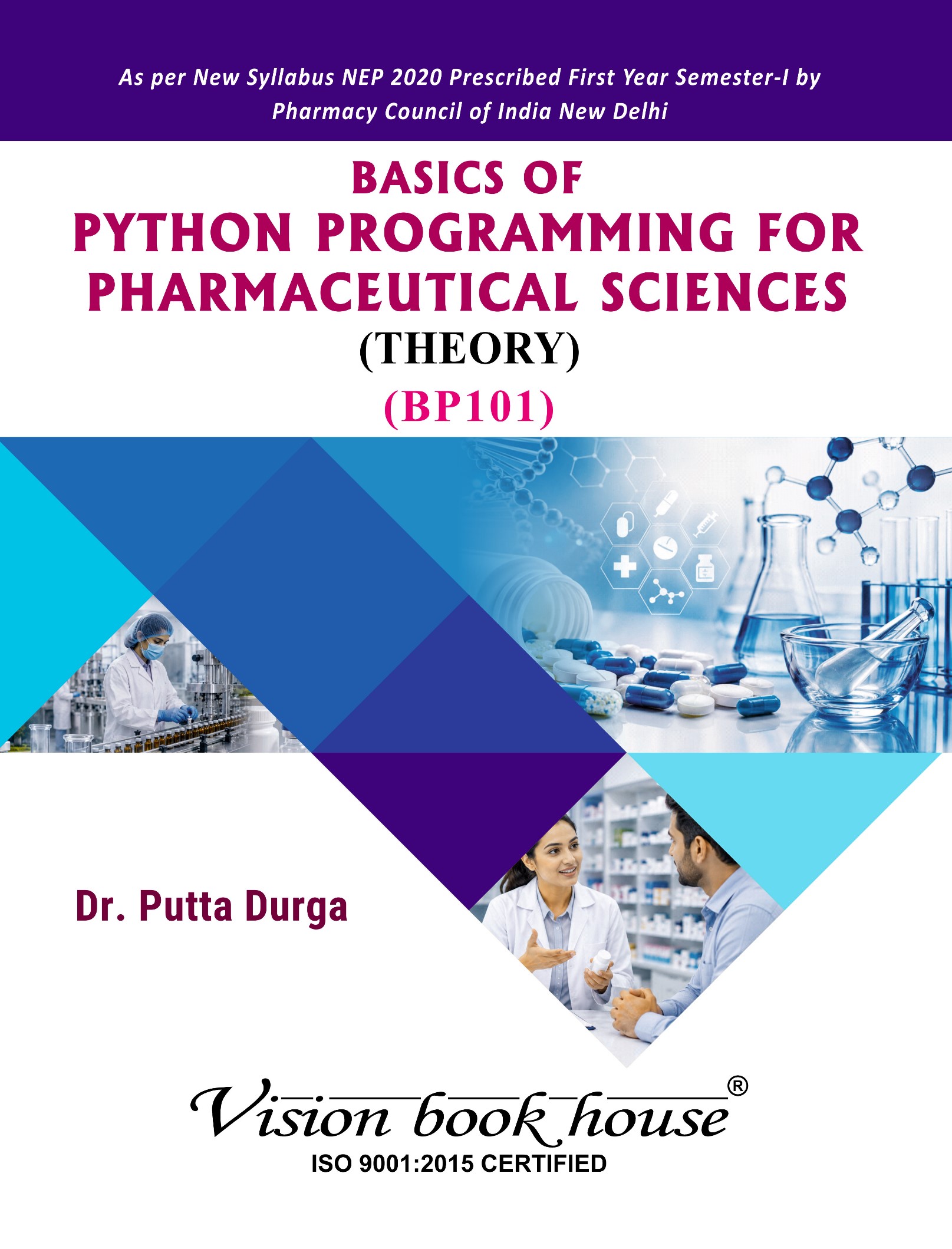

The pharmaceutical sciences are rapidly evolving with the integration of programming, data science, artificial intelligence, machine learning, and digital technologies. In this changing environment, computational skills are becoming increasingly important for pharmaceutical students, researchers, and professionals.
I have prepared Basics of Python Programming for Pharmaceutical Sciences with the aim of providing a simple, systematic, and practical introduction to Python, particularly for learners from pharmaceutical backgrounds. The book presents fundamental programming concepts through relevant pharmaceutical and biomedical examples, making the subject easier to understand and apply.
The book is organized into five units covering Introduction to Python Programming, Control Structures and Functions, Data Structures, Data Handling with Pandas, and Data Visualization with Matplotlib. Examples related to drug data, patient records, pharmacokinetic studies, dissolution profiles, pharmacovigilance, laboratory data, and pharmacy inventory have been included to demonstrate the practical applications of Python in pharmaceutical sciences.
My objective in writing this book is not only to introduce students to programming but also to develop computational thinking, data-analysis skills, scientific problem-solving abilities, and confidence in using Python for pharmaceutical applications. The concepts presented in this book can also provide a foundation for further study in data science, machine learning, artificial intelligence, and scientific computing.
Contents –
Unit-1 Introduction to Python Programming
Unit-2 Control Structures and Functions
Unit-3 Data Structures and File Handling
Unit-4 Data Handling with Pandas
Unit-5 Data Visualization with Matplotlib