

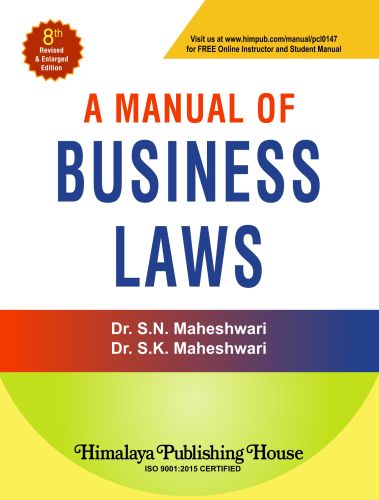
In a global business scenario, people involved in the business activities, while interacting with each other, my confront with so many problems. It may be noncompliances of trade agreement by accident or by deliberate intentions or due to bad time or for any other uncontrollable reason. Such non-compliances will lead to misunderstanding between the parties involved in business process. For the smooth settlement of these problems, many legislation have been enacted. These legislation include Contract Act, 1872, Sale of Goods Act, 1930, Consumer Protection Act, etc., and they are serving as frameworks and guidelines to conduct business on sound lines. These business legislations facilitate the businessmen to avoid litigation, while conducting the business.
The students of business education, should have the knowledge of these legislations which control the business process and guide business people to run the activities on the ethical lines. If they cross the ethical borders, these legislations contain provisions to punish them according to the intensity of malpractices they commit. New legislations concerning business are enacted from time to time, to address new business problem that crop up. Amendments are also made to the existing legislations to smoothen the business operations.
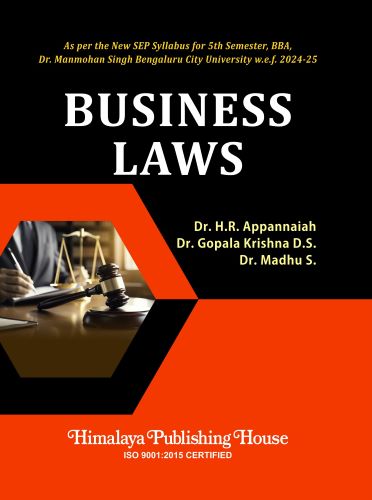
With the intention of providing information to students of business education (B.Com., BBA, M.Com., MBA, etc.), vital Acts are incorporated in the subject “BUSINESS LAWS”, which will be the core subject of study in business education course. By studying these legislations, students will be well informed of various facets of business and concerned legal aspects. The Acts also give protection to business people to run business on sound lines.
Contents –
CHAPTER – 1 ESSENTIALS OF VALID CONTRACTS-1
Introduction – Definition of Contract, Essentials of Valid Contract;
Offer and Acceptance – Offer and Acceptance and their various types, Intention to create legal relationship, Communication of Offer and Acceptance, Revocation and mode of revocation of offer and acceptance
Consideration – Meaning and nature of Consideration, Exceptions to the rule- No Consideration- No Contract, Adequacy of consideration, Present and past consideration, Unlawful consideration and its effects
Contractual capacity – Meaning of Capacity to Contract, Incapacity to contract- Minors, Persons of Unsound Mind, Disqualified agreements, Effects of Minors Agreement.
CHAPTER – 2 ESSENTIALS OF VALID CONTRACTS-2
Consent – Meaning of Consent and Free Consent; Meaning and Effects of Coercion, Undue Influence, Fraud, Misrepresentation, Mistake in an agreement.
Performance of Contract – Rules regarding Performance of Contracts, Joint Promisors, Impossibility of Performance, Quasi contracts & its performance
Discharge of a Contract – Meaning of Discharge and modes of Discharging a Contract –Novation, Remission, Accord, Satisfaction and Breach-Anticipatory Breach and Actual breach
Remedies for Breach of Contract – Remedies under Indian Contract Act 1872-Damages, Types of Damages
CHAPTER – 3 INDIAN SALE OF GOODS ACT
Concept of Goods, Sale of Goods v. Agreement to Sell, Contract of Sale of Goods, Performance of a Contract of Sale of Goods, Meaning and Types of Conditions and Warranties, Meaning and Rights of an Unpaid Seller
CHAPTER – 4 CONSUMER PROTECTION & CYBER LAWS
Consumer Protection Laws – Definitions of the terms – Consumer, Consumer Protection, Consumer Dispute, Defect, Deficiency, Unfair Trade Practices, Rights of Consumer under the Act, Consumer Redressal- Meaning and Agencies – District Commission, State Commission and National Commission, Discussion of Leading Cases. Cyber Laws – Introduction to Information Technology Act 2000, (Amended 2018)- Features, Important Concepts-Private Key, Public Key, Digital Signature, Digital Signature Certificate; Cyber Crimes- Offences and Penalties for E-Frauds and Illegitimate Digital Arrest.
CHAPTER – 5 ENVIRONMENTAL PROTECTION LAWS
Introduction – Objectives of the Act, Definitions of Important Terms – Environment, Environment Pollutant, Environment Pollution, Hazardous Substance and Occupier, Types of Pollution, Powers of Central Government to protect Environment in India.