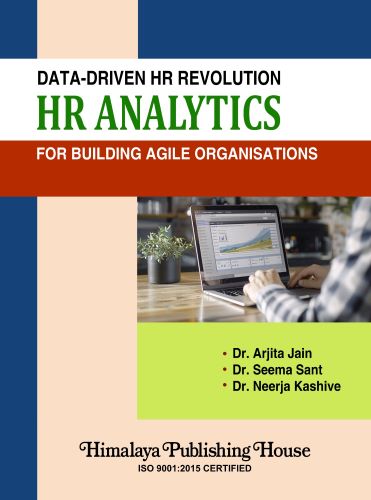





“Data-Driven HR Revolution: HR Analytics for Building Agile Organisations” is designed for HR students, management learners and HR professionals to understand the evolving role of analytics in modern HRM. Aligned with NEP 2020 and competency-based learning, the book provides practical insights into HR Analytics, HRIS, analytical tools and data-driven decision-making across key HR functions. It also explores predictive analytics, HR metrics, ethics and data governance to develop future-ready HR competencies for agile organisations.
Contents –
Chapter 1: Introduction to Analytics
1.1 Introduction
1.2 Definitions
1.3 Scope of Analytics
1.4 Evolution of Analytics: A Timeline
1.5 The Analytics Process
1.6 Data Types and Sources
1.7 Business Analytics (BA)
1.8 HR Analytics and Its Relevance
1.9 Challenges of HR Analytics
1.10 Building Agile Organisations
1.11 Chapter Summary
1.12 Key Terms/Glossary
1.13 Review Questions
Chapter 2: Matrices and Types of Analytics
2.1 Terminology of Matrices and Analysis
2.2 Types of Analytics
2.3 Models in HR Analytics
2.4 Chapter Summary
2.5 Key Terms/Glossary
2.6 Review Questions
Chapter 3: HR Information System (HRIS) and Data
3.1 Introduction
3.2 The Role of Data in HRIS
3.3 HRIS Modules for Efficient HR Management
3.4 Types of HRIS
3.5 Role of HRIS in Strategic HRM
3.6 HR Data Types
3.7 HR Analytics and HRIS
3.8 Tools and Technologies in Analytics
3.9 Preparing Data: Using Software Big Data
3.10 Chapter Summary
3.11 Key Terms/Glossary
3.12 Review Questions
Chapter 4: Analysis Strategies
4.1 Introduction
4.2 Hypothesis Testing and Statistical Significance
4.3 Data types in Analysis
4.4 Dependent Variables and Independent Variables
4.5 Types of Statistical Tests
4.6 Factor Analysis
4.7 Reliability Analysis
4.8 Chapter Summary
4.9 Key Terms/Glossary
4.10 Review Questions
Chapter 5: Talent Acquisition Analytics
5.1 Introduction
5.2 Challenges for Talent Acquisition (TA) Analytics
5.3 Enhancing TA Analytics Matters
5.4 Framework for Talent Acquisition Analytics
5.5 Sources of Data
5.6 Metrics in Talent Acquisition
5.7 Talent Acquisition Analytics Example
5.8 Strategies to Improve ROI of Talent Acquisition
5.9 The Future of TA Analytics
5.10 Getting Started: How Organisations can begin to Upgrade
5.11 Chapter Summary
5.12 Key Terms/Glossary
Chapter 6: Learning and Development Analytics
6.1 Introduction
6.2 Objectives of Learning and Development Analytics
6.3 Key Metrics and KPIs in Learning and Development Analytics
6.4 Data Sources for Learning and Development Analytics
6.5 Analytical Techniques for Learning and Development
6.6 Approaches/Models/Theories
6.7 Practical Implications
6.8 Application Areas of Learning and Development Analytics
6.9 Challenges in Learning and Development Analytics
6.10 Summary of Practices
6.11 Chapter Summary
6.12 Key Terms/Glossary
6.13 Review Questions
Chapter 7: Performance Analytics
7.1 Introduction
7.2 Objectives and Importance of Performance Analytics
7.3 Types of Performance Metrics
7.4 Key Performance Indicators (KPIs)
7.5 Data Sources for Performance and Reward Analysis
7.6 Approaches/Models/Theories
7.7 Practical Implications
7.8 Compensation and Benefit Analysis
7.9 Tools and Techniques in Performance and Reward Analytics
7.10 Application Areas
7.11 Summary of Practices
7.12 Challenges in Performance and Reward Analytics
7.13 Chapter Summary
7.14 Key Terms/Glossary
7.15 Review Questions
Chapter 8: Reward Analytics
8.1 Introduction
8.2 Relevant Studies
8.3 Metrics for Reward Analytics
8.4 Compa-ratio
8.5 Pay Equity Analysis
8.6 Conclusion
8.7 Chapter Summary
8.8 Key Terms/Glossary
8.9 Review Questions
Chapter 9: Employee Engagement and Diversity Metrics
9.1 Introduction
9.2 Employee Engagement and Workforce Perceptions
9.3 Measuring Employee Engagement
9.4 Relevance of DEIB (Diversity, Equity, Inclusion and Belongingness)
9.5 Measuring DEIB Initiatives
9.6 Approaches/Models/Theories
9.7 Practical Implications
9.8 Analytical Strategies for Engagement and Diversity
9.9 Challenges in Engagement and Diversity Analytics
9.10 Summary of Practices
9.11 Chapter Summary
9.12 Key Terms/Glossary
9.13 Review Questions
Chapter 10: Predicting Employee Turnover
10.1 Introduction
10.2 Machine Learning Methods
10.3 Metrics for Turnover Analytics
10.4 Turnover Analytics Example
10.5 Challenges in Turnover Analytics
10.6 Chapter Summary
10.7 Key Terms/Glossary
10.8 Review Questions
Chapter 11: Ethics in Analytics
11.1 Introduction
11.2 Principles of Ethical Data Use
11.3 Data Privacy and Confidentiality
11.4 Ethical Use of Predictive Models
11.5 Ethical Standards for HR Analytics
11.6 Transparency in Data Collection and Usage
11.7 Security of Sensitive Data
11.8 Legal and Regulatory Compliance
11.9 Role of Data Governance
11.10 Ethical Dilemmas
11.11 Chapter Summary
11.12 Key Terms/Glossary
11.13 Review Questions
References