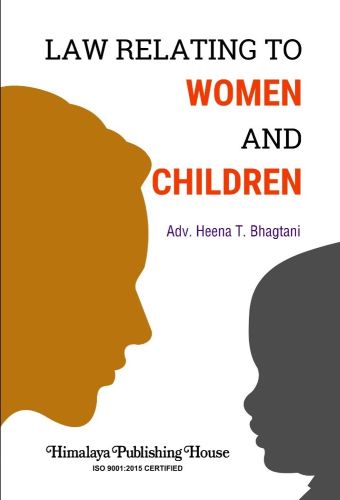
The legal rights and protections for women and children are essential to ensuring a fair and just society. In India, where social and cultural challenges still affect these groups, understanding the laws that safeguard their rights is crucial. This book, Law Relating to Women and Children, is based on the curriculum of Mumbai University and aims to explain the key legal concepts and protections available to women and children in India.
The law plays a vital role in protecting women from violence, discrimination, and exploitation, while also ensuring the safety, health, and education of children. This book covers important laws, court decisions, and legal issues related to these areas, making it a valuable resource for students, legal professionals, and anyone interested in understanding how the law supports women and children.
Mumbai University’s legal curriculum provides a strong foundation for this book, helping readers grasp both the theory and practical application of these laws. This book is designed to be an easy-to-understand guide to the complex legal frameworks that protect women and children in our society.
Contents –
1. Social, Constitutional, And Legal Status of Women
1.1 Status of Women in India – Pre-independence Period
1.1.1 Social and Legal Inequality
1.1.2 Social Reform Movement in India
1.1.3 Karachi Congress
1.1.4 Fundamental Rights Resolution
1.1.5 Equality of Sexes
1.2 Constitution of India and Women Preamble
1.2.1 Fundamental Rights
1.2.2 Directive Principles of State Policy
1.2.3 Reservation for Women in Local Bodies
1.3 Personal Laws Relating to Marriage, Divorce, Succession and Maintenance with Special Emphasis on Discrimination of Women
1.3.1 Uniform Civil Code Towards Gender Justice
1.3.2 Special Marriage Act, 1954
1.4 Criminal Laws and Women – Provisions to Protect Women under Indian Penal Code 1860
1.4.1 Code of Criminal Procedure, 1973 and Indian Evidence Act, 1872
1.5 Position of Women Under International Instruments – Salient Features of Convention for Elimination of All Forms of Discrimination Against Women (CEDAW) and Optional Protocols to the Convention
1.6 Questions
2. Women Welfare Laws
2.1 Pre-conception and Pre-natal Diagnostic Techniques (Prohibition of Sex Selection) Act, 1994 and Medical Termination of Pregnancy Act, 1971
2.2 Indecent Representation of Women (Prohibition) Act, 1986
2.3 Sexual Harassment of Women at Workplace (Prevention, Prohibition and Redressal) Act, 2013
2.4 Dowry Prohibition Act, 1961
2.5 Protection of Women from Domestic Violence Act, 2005
2.6 Immoral Traffic (Prevention) Act, 1956
2.7 Maternity Benefit Act, 1961 and Factories Act, 1948
2.8 National Commission for Women Act, 1990
2.9 Questions
3. Social, Constitutional and International Legal Status of Child
3.1 Socio-Legal Issues Deferred Infanticide Through Biased Nutritional Discrimination, Regulation of the Employment, Child Labour, Recommendations of the National Commission of Labour, Female Foeticide
3.2 Constitutional Concern – Article 15(3), Article 21A, Articles 23, 24, 28, 29, Article 39(e) and (f) and Article 45, Article 243(G) Schedule XI, Article 350A, State Responsibility for the Education of Children, Constitutional Safeguards to Children
3.3 Safeguards under Indian Penal Code, 1860, Hindu Adoptions and Maintenance Act, Hindu Minority and Guardianship Act, Tort Law, Contract Law and Partnership Law
3.4 International Concern and Endeavour for the Welfare of the Children – Minimum Age Convention, 1973; UN Declaration of the Rights of the Child, 1959; Role of UNESCO, UNICEF and ILO UN Convention on Rights of a Child, 1989
3.5 Questions
4. Special Legislation for the Protection of Children
4.1 Special Legislation for the Protection of Children
4.2 Prohibition of Child Marriage Act, 2006
4.3 The Right of Children to Free and Compulsory Education Act, 2009
4.4 National Food Security Act, 2013
4.5 Child Labour (Prohibition and Regulation) Act, 1986
4.6 Commissions for the Protection of Child Rights Act, 2005
4.7 Young Persons Harmful Publications Act, 1956
4.8 Immoral Traffic (Prevention) Act, 1956
4.9 Bombay Prevention of Begging Act, 1959
4.10 Questions