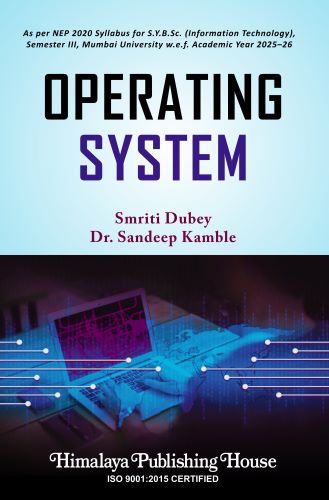

An Operating System (OS) is the foundation of every computer system. It acts as a bridge between the user and the computer hardware, ensuring that all resources are managed efficiently and that programs run smoothly. Whether using a desktop computer, laptop, smartphone, or server, every digital device depends on an operating system to perform its tasks.
This book has been prepared according to the National Education Policy (NEP) syllabus for Second Year B.Sc. Information Technology students. It presents the concepts of operating systems in a simple, systematic, and student-friendly manner. The content is organised to help learners understand both the theoretical principles and practical applications of operating systems used in modern computing environments.
The book begins with an introduction to operating systems, covering their evolution, types, structure, services, system calls, boot process, system programs, and security features. It then explains process management, including process creation, scheduling techniques, threads, and process synchronisation using semaphores and classic synchronisation problems.
Further chapters focus on memory management, explaining concepts such as paging, segmentation, virtual memory, page replacement algorithms, frame allocation, and thrashing. Deadlock management is discussed in detail, including methods for prevention, avoidance, detection, and recovery. The book also introduces file systems, file organisation, directory structures, and file access methods, enabling students to understand how operating systems store and manage data.
Each topic is presented using clear explanations, diagrams, tables, solved examples, and practical illustrations to make learning easier. The language has been kept simple so that students can build a strong conceptual foundation while preparing for university examinations, competitive examinations, and technical interviews.
This book aims to develop logical thinking, analytical ability, and practical understanding of operating system concepts. It serves as a valuable learning resource for students, teachers, and anyone interested in understanding how modern computer systems function.
Contents –
Module I
1 Operating System Overview
2 Process Management
3 Process Synchronisation
Module II
4 Memory Management
5 Deadlocks
6 File System Interface