

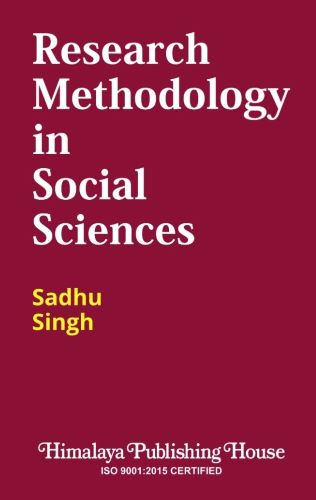
Business Research Methodology, as a core subject of study in most business education curriculum of most universities and Business Schools, has contributed significantly for the development of core competence of the managers of tomorrow. Research Methodology provides a decision-making base to managers to take sound managerial decisions. When manager themselves conduct a, Research Methodology tells what quality research is.
As a student of business education, one should know the conceptual toots and techniques to empower oneself about the (i) Scientific method to be applied in a business setting (ii) to decide whether the research is well conducted and (iii) to adopt planning and control of any business research. Even the teachers of Research Methodology should know the ins and outs of ft to teach this subject in a comprehensive manner. Business researchers lace certain conflicts when they start planning a research concerning a business problem. It may be between the objectives to be incorporated in research, which may oppose to each other or a conflict between traditional and modern research methods. To avoid these conflicts many follow the traditional methodology. Wherever the research is complex in nature, researchers adopt modern IT solutions like SPSS tool to avail correct results and to save time in conducting research.
This title is written for beginners of research to understand in a simple way the methodology of research. As a subject of study in core area of degree level, most of the universities offering business education (B.Com., BBM, BBA, etc.,) have introduced Research Methodology as one of the essential subjects of study for the reasons cited above. In this context, this title is prepared to give a broad outline of Research Methodology covering mainly the syllabus content at degree level. Written in a simple style, many Research Methodology models are given at each and every chapter to give an insight into methodology. The whole Research Methodology process is explained in a sequential order commencing from exploring and identifying the research problem to development of research design to collection of data to analysis, interpretation of data and reporting. In annexure, certain latest tools and techniques are given. At the end of each chapter graded questions and practical exercises are given for self-study.
Contents –
UNIT – 1 INTRODUCTION TO RESEARCH AND BUSINESS RESEARCH
Research: Meaning, Characteristics of Good Research. Business Research: Meaning and Need. Types of Research: Exploratory, Descriptive, Analytical and Applied Research. Steps in Research Process; Research Problem: Meaning and Formulation of Research Problem. Research Design: Meaning and Types; Hypothesis: Meaning and Types – Null and Alternative Hypothesis.
UNIT – 2 DATA COLLECTION AND SAMPLING
Data: Meaning; Types of Data – Primary and Secondary Data. Methods of Data Collection: Qualitative Methods – Observation, Interviews, Focus Group Discussion and Case Study; Quantitative Methods – Survey, Schedule and Questionnaire. Sampling: Meaning and Methods of Sampling – Probability and Non-Probability Sampling Techniques; Steps in Sampling Process; Sampling Error and Non-Sampling Error.
UNIT – 3 TOOLS AND TECHNIQUES FOR DATA COLLECTION
Questionnaire: Design and Structure; Attitude Measurement Techniques – Likert Scale, Semantic Differential Scale, Ranking and Rating Scales; Motivational Techniques – Focus Group Discussion, Projective Techniques, Role Playing and Observation Technique. Validity and Reliability of Research Instruments; Scaling Techniques – Nominal, Ordinal, Interval and Ratio Scales; Factors Influencing Selection of Appropriate Data Collection Tools. AI-powered Tools for Data Collection – Chatbots, Smart Surveys, Google Forms, Typeform and Kobo Toolbox.
UNIT – 4 DATA ANALYSIS AND INTERPRETATION
Data Analysis: Meaning and Importance; Techniques of Data Analysis – Tabulation and Classification of Data; Descriptive Statistics: Mean, Median, Mode and Percentages; Graphical Representation of Data; Correlation and Regression (Basic Concept only); Hypothesis: Meaning and Steps in Hypothesis Testing; Parametric and Non-Parametric Tests (Concepts only); Errors in Hypothesis Testing.
UNIT – 5 REPORTING AND PRESENTATION
Research Report: Meaning, Structure and Components; Types of Reports – Business, Technical and Academic Reports; Report Writing Process; Bibliography and Citation Styles – APA and MLA. Plagiarism: Meaning and Academic Ethics.
