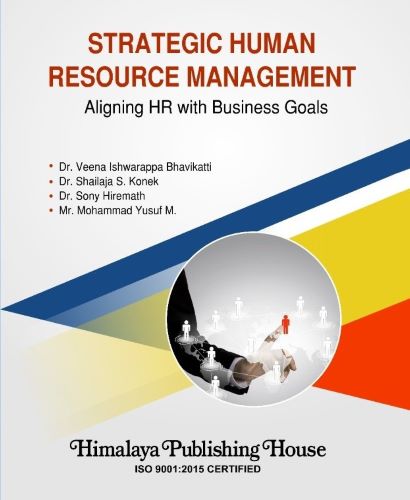

This book charts the evolution of HR from a back-office function to a central strategic partner essential for competitive advantage. By aligning human capital with business goals through frameworks like the Resource-Based View, it provides a roadmap for driving specific organisational outcomes. The text emphasises workforce analytics, AI integration, and the development of agile “learning organisations.” Ultimately, it frames DEI and CSR not as optional extras, but as critical, future-proof components of a robust corporate strategy.
Contents –
UNIT-I INTRODUCTION TO STRATEGIC HUMAN RESOURCE MANAGEMENT
1.1. Introduction to Strategic Human Resource Management
1.2. Concept, Nature, and Scope of Strategic Human Resource Management (SHRM)
1.3. Differences between Traditional HRM and Strategic Human Resource Management
1.4. Evolution and Development of Strategic Human Resource Management (SHRM)
1.5. Importance of Aligning HR Strategy with Organisational Strategy
1.6. HR as a Strategic Partner — Role in Achieving Competitive Advantage
1.7. Models of SHRM — Best Practice vs. Best Fit
1.8. Models of SHRM — The Resource-Based View (RBV)
1.9. Models of SHRM — The Harvard Model
1.10. Models of SHRM — The Michigan Model
1.11. Summary
1.12. Case Study: Infosys — From Traditional HRM to SHRM
1.13. Glossary
1.14. Short Questions
1.15. Long Questions
1.16. Multiple Choice Questions (MCQs) with Answers
1.17. Bibliography
UNIT 2 STRATEGIC HR PLANNING AND TALENT MANAGEMENT
2.1. Strategic HR Planning and Talent Management
2.2. Linking Business Strategy with HR Planning
2.3. Human Resource Forecasting and Workforce Analytics
2.4. Talent Acquisition Strategy
2.5. Succession Planning and Strategic Workforce Planning
2.6. Employer Branding and Attracting High-Performing Talent
2.7. Strategic Issues in Recruitment, Selection, and Placement
2.8. Summary
2.9. Case Study: Infosys Limited
2.10. Glossary
2.11. Short Questions
2.12. Long Questions
2.13. Multiple Choice Questions (MCQs) with Answers
2.14. Bibliography
UNIT 3 PERFORMANCE MANAGEMENT AND REWARD SYSTEMS
3.1. Performance Management and Reward Systems
3.2. Aligning Performance Management Systems with Strategic Goals
3.3. Designing Effective Appraisal Systems for Strategic Outcomes
3.4. Linking Individual and Team Performance with Organisational Objectives
3.5. Strategic Compensation and Reward Management
3.6. Pay-for-Performance and Variable Pay Structures
3.7. Aligning Incentives and Benefits with Business Priorities
3.8. Summary
3.9. Case Study: Infosys – Integrated Performance and Rewards
3.10. Glossary
3.11. Short Questions
3.12. Long Questions
3.13. Multiple Choice Questions (MCQs) with Answers
3.14. Bibliography
UNIT 4 STRATEGIC TRAINING AND DEVELOPMENT
4.1. Strategic Training and Development
4.2. Strategic Role of Training and Development
4.3. Learning Organisation and Knowledge Management
4.4. Designing Training Aligned to Business Goals
4.5. Leadership Development and Succession Planning
4.6. Career Management Strategies for Competitive Advantage
4.7. Evaluating Training Effectiveness at a Strategic Level
4.8. Summary
4.9. Case Study: Infosys — A Strategic Approach to Learning
4.10. Glossary
4.11. Short Questions
4.12. Long Questions
4.13. Multiple Choice Questions (MCQs) with Answers
4.14. Bibliography
UNIT 5 CONTEMPORARY ISSUES IN STRATEGIC HUMAN RESOURCE MANAGEMENT
5.1. Contemporary Issues in Strategic Human Resource Management
5.2. Managing Change and Organisational Transformation through SHRM
5.3. Strategic HR Issues in Mergers and Acquisitions
5.4. Global HRM and Strategies for Managing a Cross-Cultural Workforce
5.5. Corporate Social Responsibility (CSR) and Strategic Human Resource Management (SHRM)
5.6. Diversity, Equity, Inclusion, and Employee Well-being as Strategic Priorities
5.7. Future Trends in SHRM — Digitalisation, AI, and the Evolving Workforce
5.8. Summary
5.9. Case Study: Microsoft — SHRM for a Digital, Inclusive, and Responsible Future
5.10. Glossary
5.11. Short Questions
5.12. Long Questions
5.13. Multiple Choice Questions (MCQs) with Answers
5.14. Bibliography