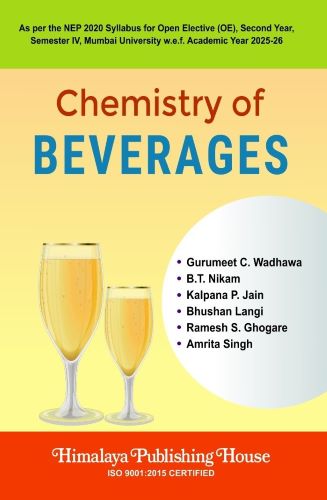



Beverages, both alcoholic and non-alcoholic, play an essential role in human culture, nutrition, and the global economy. Their evolution—from simple natural drinks to today’s diverse commercial products—reflects the growth of science, technology, trade, and consumer preferences. Understanding beverages is therefore not only relevant from a food science perspective but also vital for appreciating their economic, cultural, and health-related significance. This book has been developed as part of the Open Elective Course for Second Year students of Mumbai University, with the objective of offering a comprehensive yet accessible understanding of beverages. The content is designed to introduce students to the history, importance, definition, and classification of beverages, enabling them to build a strong conceptual foundation.
The first section focuses on non-alcoholic beverages, covering their types, examples, ingredients, nutritional values, and associated health concerns. Students are introduced topackaged drinking water, fruit-based beverages, synthetic beverages, still and carbonated beverages, low-calorie drinks, sports drinks, dairy-based beverages, as well as traditional beverages such as tea, coffee, and cocoa. In line with national regulatory standards, the section also includes FSSAI specifications for synthetic beverages to foster awareness about food safety and quality control.
The second section explores alcoholic beverages, tracing their historical relevance and economic impact. It provides students with an understanding of fermentation and distillation, the scientific foundations behind alcohol production. Detailed study of beer, wine, and liquor—along with their raw materials, constituents, and sub-types—offers a practical perspective on the diversity within alcoholic beverages. Furthermore, the section discusses FSSAI specifications for brandy, whiskey, and beer, ensuring students are informed about legal and quality standards in India. Recognising the broader implications of beverage consumption, the book also includes topics on health benefits and hazards, as well as the sociocultural dimensions associated with drinking practices. These discussions encourage students to think critically and responsibly about beverage consumption in contemporary society.
Contents –
1. Non-Alcoholic Beverages
2. Alcoholic Beverages