
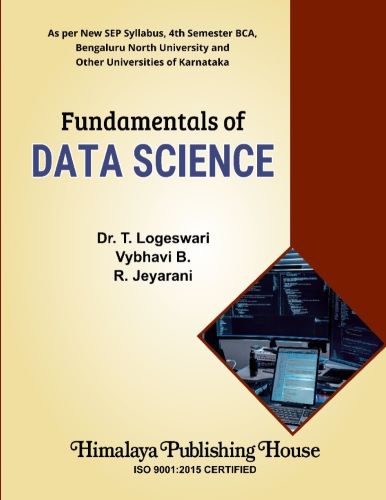


Welcome to the world of Data Science, where the ability to extract meaningful insights from vast amounts of data transforms raw information into knowledge and drives innovation. In today’s data-driven era, understanding the fundamentals of data science is not just an advantage but a necessity. Data is being generated at an unprecedented rate, and the ability to analyze and interpret this data plays a crucial role in decision-making across industries.
The book “Fundamentals of Data Science” provides a comprehensive journey through the core concepts that shape this dynamic and evolving field. It is written with the goal of simplifying complex ideas and equipping readers with the essential knowledge and skills required to navigate the modern data landscape effectively.
The book begins by introducing the foundational pillars of data science—mathematics, statistics, and computer science. These disciplines form the backbone of data analysis, enabling the collection, processing, interpretation, and visualization of data. A strong understanding of these fundamentals helps readers build accurate models and make reliable predictions.
Moving forward, the book focuses on practical aspects such as data manipulation, data exploration, and data visualization. These skills are essential for understanding patterns, trends, and relationships within large datasets. Readers learn how to clean, organize, and present data in meaningful ways that support clear and effective communication of insights.
As the journey progresses, the book introduces the fascinating domain of machine learning. It explains complex concepts in a simple and practical manner, supported by real-world examples and case studies. Readers discover how machine learning algorithms can identify patterns, predict outcomes, and support intelligent decision-making in areas such as healthcare, business, finance, and technology.
Beyond technical knowledge, the book strongly emphasizes ethical responsibility in data science. With great data power comes the need for honesty, transparency, and respect for privacy. The book encourages readers to handle data responsibly, ensuring ethical use while protecting individuals and society.
This book is designed for a wide range of readers—students beginning their journey, professionals looking to enhance their skills, and enthusiasts curious about data science. It aims not only to develop technical expertise but also to foster creativity, curiosity, analytical thinking, and problem-solving ability.
Contents –
1. Data Mining
2. Data Warehouse
3. Mining Frequent Patterns
Questions and Answers
Model Question Paper