

The integration of computational data science into pharmaceutical education marks a pivotal shift in how future pharmacists and researchers approach drug discovery, clinical trials, formulation design, and patient care. As healthcare transitions toward data-driven decision-making, the modern pharmacy professional requires not only a solid foundation in biomedical and chemical sciences but also practical fluency in computational tools. Python has emerged as the global industry standard for this purpose due to its clear syntax, robust open-source ecosystem, and powerful analytical libraries.
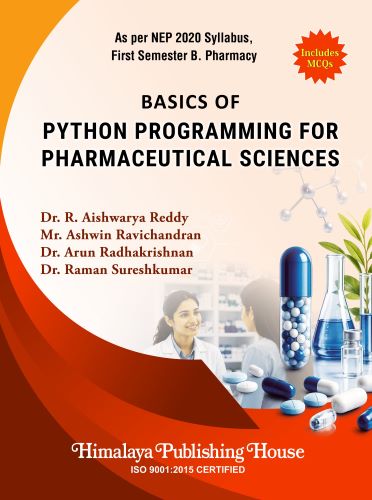
Basics of Python Programming for Pharmaceutical Sciences is designed specifically as a foundational core textbook tailored for undergraduate pharmacy students (B.Pharm). While many programming resources cater exclusively to computer science engineers, this text bridges the gap between abstract syntax and concrete pharmaceutical applications. It contextualises core computational concepts through practical pharmacy problems—ranging from simple dosage and BMI calculations to pharmacokinetic profile visualisation and adverse drug reaction (ADR) data analysis.
Each chapter combines structured conceptual theory, commented Python code snippets, and pharmacy specific case studies. Clear learning objectives, worked examples, and end of chapter exercises ensure students gain hands-on proficiency in interpreting computational output accurately.
Contents –
UNIT 1 Introduction to Python Programming
UNIT 2 Control Structures and Functions
UNIT 3 Data Structures and File Handling
UNIT 4 Data Handling with Pandas
UNIT 5 Data Visualization with Matplotlib